




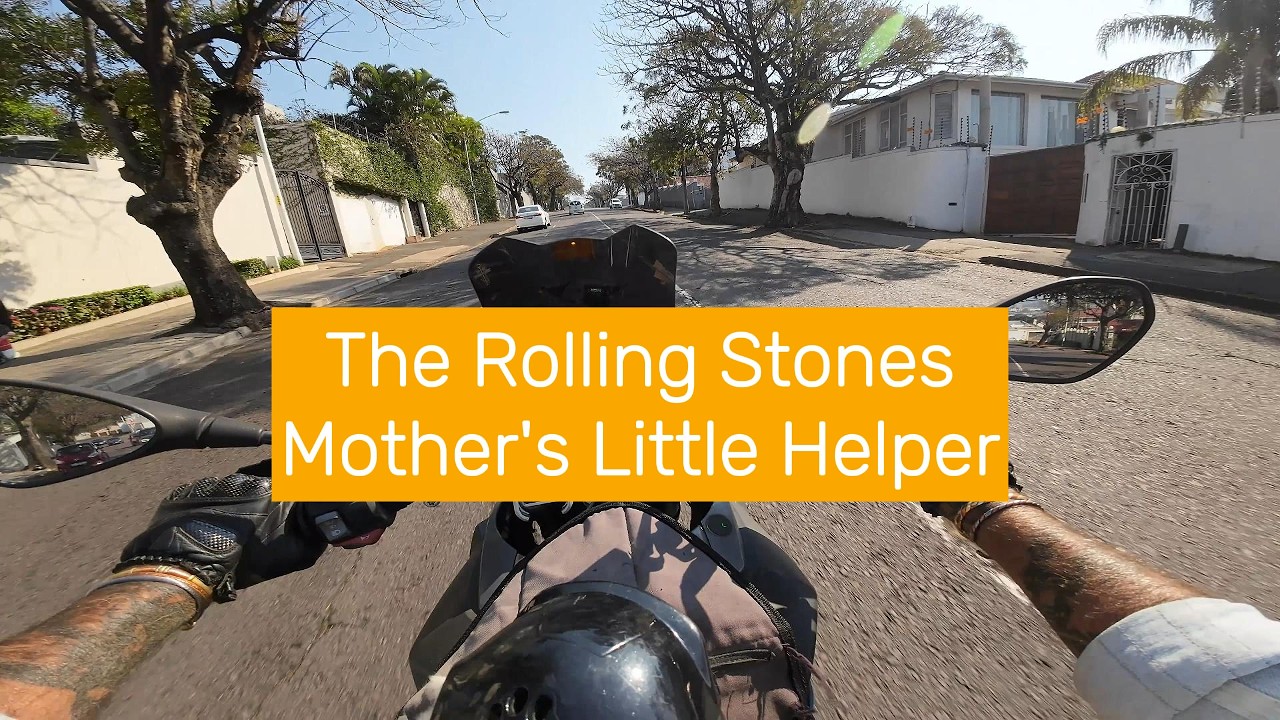
“Mother’s Little Helper” is a standout track by the Rolling Stones, written by Mick Jagger and Keith Richards. It appeared as the opening song on the UK version of their 1966 album Aftermath and was released as a single in the US (with “Lady Jane” as the B-side), reaching No. 8 on the Billboard Hot 100.
Background and Creation
The song was recorded in early December 1965 at RCA Studios in Hollywood during the band’s time in the US. It reflects the Stones’ shift toward more original, socially observant material on Aftermath, moving beyond covers and straightforward rock. Brian Jones played a key role with a distinctive 12-string electric guitar (often described as sitar-like or with Eastern/folk influences, alongside slide work), contributing to the track’s folk-rock sound with psychedelic and exotic undertones.
Jagger drew inspiration from observations of suburban American housewives’ reliance on prescription tranquilizers. He described it as a “spoofy” take on drug dependence, rooted in everyday life rather than heavy-handed advocacy. The “little yellow pill” likely refers to drugs like Valium (diazepam, introduced in 1963) or Miltown (meprobamate), which were heavily marketed to women for anxiety, boredom, and domestic stress.
Lyrics and Themes
The lyrics use satire and irony to portray a middle-aged housewife’s dependence on pills to cope with daily life. The recurring refrain “What a drag it is getting old” sets a tone of complaint and existential dissatisfaction.
Key excerpts and breakdown:
- Verse 1: “Kids are different today, I hear every mother say / Mother needs something today to calm her down / And though she’s not really ill, there’s a little yellow pill…” — Highlights generational clashes and the medicalization of normal stress.
- Verse 2: References modern conveniences like instant cake and frozen steak turning domestic tasks into a “drag,” showing how consumerism fails to fulfill.
- Bridge/Chorus: The mother’s pleas to the doctor (“Doctor, please, some more of these”) and warnings of overdose culminate in a dark ending: “No more running for the shelter… They just helped you on your way, through your busy dying day.”
The song critiques hypocrisy in 1960s society: adults condemned youth drug use while relying on legal pharmaceuticals. It also touches on gender roles, suburban ennui, and the pursuit of happiness feeling like a bore. Some interpretations see it as pointing out middle-class double standards, while others note its anti-romantic edge (part of a run of Stones tracks critiquing women). Jagger’s delivery adds crude irony and humor.


Check out Jonty’s play list: HERE
Contact & Socials: HERE