





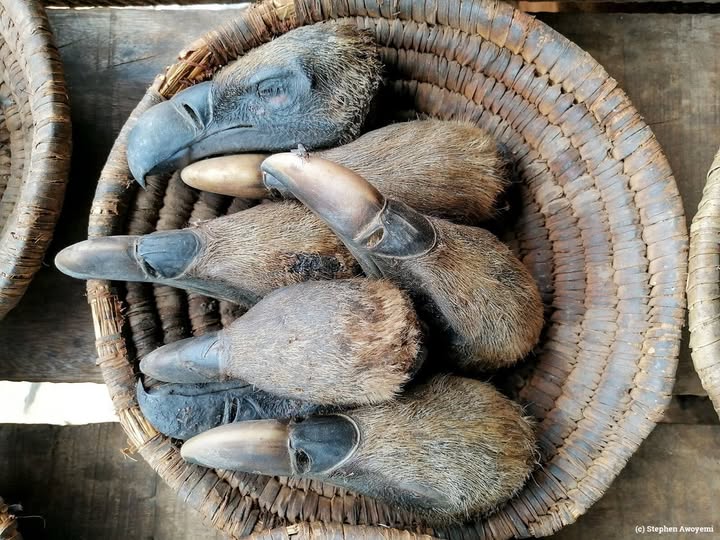
Multiple sources document this illegal trade across West, Central, and parts of Southern Africa. Vulture heads are particularly valued (along with whole carcasses, brains, feet, feathers, and other parts) for supposed powers including protection from witchcraft, foresight/prophecy, success in gambling or business, curing mental/physical ailments, or bringing good fortune.
Scale of the problem
- A 2016 analysis of nearly 8,000 recorded vulture deaths across 26 African countries attributed ~61% to poisoning and ~29% to trade for traditional medicine (the two often overlap, as birds are deliberately poisoned then harvested).
- Populations of several species have crashed: average declines of ~62% (or 80%+ over three generations for some) for eight assessed species; some local or regional losses exceed 90–97%. Several African vultures are now Critically Endangered (e.g., Hooded Vulture Necrosyrtes monachus, White-backed Vulture Gyps africanus, Rüppell’s Vulture Gyps rueppellii).
- Recent market surveys show active trade. In southern Benin (2020s study), researchers counted 522 Hooded Vultures (or parts) over four months across nine markets: ~73% whole dried carcasses, ~17% heads, ~9% live birds. Birds were sourced from at least 10 countries, indicating regional/international supply chains. Prices for a live bird can exceed the average monthly income in Benin.
- In Nigerian markets, prices rose sharply (especially around the COVID-19 period): a head previously ~$10–25 could reach higher, whole carcasses and live birds even more. In Kano (northern Nigeria), reports cite heads at tens of thousands of naira and whole birds far higher.
- Mass poisoning events linked to harvesting for trade include large kills in Guinea-Bissau (thousands of Hooded Vultures, many beheaded), Senegal, and elsewhere. Poachers also poison vultures near big-mammal carcasses to avoid detection by circling birds.
Hooded Vultures are especially heavily targeted in West Africa as a commercially exploited species. As larger vultures become rarer, pressure shifts to them and sometimes other raptors (which may be modified to resemble vultures).
Ecological and other impacts
Vultures are highly efficient scavengers that rapidly clean carcasses, limiting the spread of disease (including anthrax, rabies, and other pathogens) and reducing opportunities for less efficient scavengers such as feral dogs. Their decline risks cascading effects on ecosystems and human health.
Other major threats include unintentional poisoning (e.g., livestock protection baits targeting predators), electrocution/collision with power infrastructure, habitat loss, and reduced food availability. Belief-based trade is a primary driver in parts of West and Central Africa and contributes elsewhere.
Conservation context
Trade is largely illegal and unregulated under national laws and international agreements (CITES listings apply to several species). Enforcement is often weak, markets operate openly in some places, and high profits incentivize the activity. Efforts include monitoring, awareness with traditional practitioners, stronger law enforcement, anti-poisoning work, and proposals for tighter international protections.
The 2023 Audubon article highlighted the issue with examples of beheaded birds and rising market prices; subsequent research (including detailed Benin market studies and ongoing CITES-related analyses) confirms it remains severe and, in some areas, intensifying as supply declines and prices rise.