





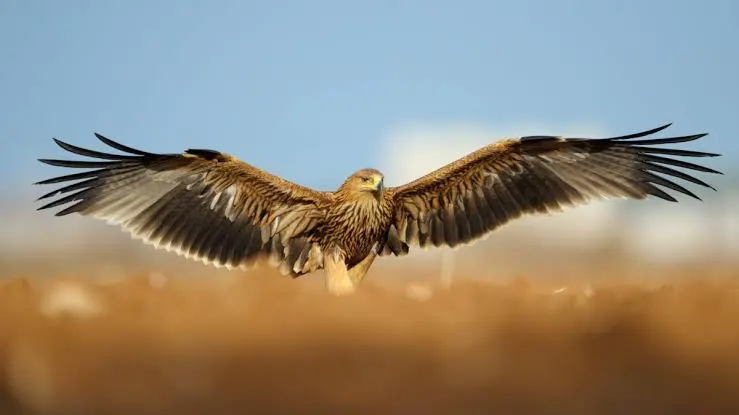
illegal trafficking, a clandestine border crossing, months of rehabilitation, and a military repatriation flight before being released back into the wild in Serbia in early August 2026.
His story highlights both the severe threats migratory birds face from illegal wildlife trade along their routes and the determined efforts of conservationists, diplomats, refugees, and even military personnel to protect a critically important species.
The Ordeal
Feliks fledged in Serbia in the summer of 2025 (one of a slowly recovering local population) and began his first migration south toward the Middle East in August. Conservationists from the Bird Protection and Study Society of Serbia (BPSSS) were tracking him via satellite transmitter. The signal was lost in October after he entered a high-risk area in Syria. Initially they hoped it was a technical failure; instead, poachers had captured him.
Poaching of migratory raptors is widespread in parts of the region. Common methods include placing water sources in arid areas to lure thirsty birds, shooting, netting, or pursuing them on motorbikes. Feliks appeared for sale on WhatsApp groups used by traffickers dealing in endangered species. A ransom demand followed. Serbian conservationists categorically refused to pay, viewing it as support for the trafficking networks.
Michel Sawan, head of the Lebanese Association for Migratory Birds, learned of the bird through those groups and mobilized contacts in Syria. After complex dealings, Feliks was sold to a buyer in Lebanon, resold back into Syria, and eventually recovered through Sawan’s network. Getting him across the border proved extremely difficult due to fighting and weather. Refugees ultimately carried the large bird (adult eastern imperial eagles have wingspans of about 2 meters / 6 feet) in a potato sack across the Nahr al-Kabir river on the northern Syria-Lebanon border. Sawan described the operation as “crazy.”
Feliks spent more than six months recovering at a wildlife rehabilitation center associated with Sawan (reports place it in the Beirut area or northern Lebanon near Zgharta). Returning him to Serbia became nearly impossible after regional conflict escalated in early 2026 (references to war involving Iran appear in reporting). Multiple commercial flight attempts failed. Serbian troops serving in the UN peacekeeping mission in Lebanon then arranged his transport. On 22 June 2026 he arrived home on a Serbian military transport plane and was taken to Palić Zoo in northern Serbia for further recovery and quarantine. He arrived exhausted.
After more than a month of monitoring and care, staff released him into the wild near Subotica in early August 2026 (reports specify a Thursday in the first week of the month). Conservationists expressed hopes that he would regain strength, establish territory, and eventually breed. He continues to be monitored.
Broader Context: Species Recovery and Ongoing Threats
The eastern imperial eagle is listed as Vulnerable globally by the IUCN and is strictly protected. In Serbia the situation was near-catastrophic: by 2017 only a single known breeding pair remained after decades of habitat loss (conversion of pastures and loss of nesting trees), declines in key prey such as the European ground squirrel, persecution, poisoning, and collisions with power infrastructure.
Intensive conservation by the BPSSS (supported by EU-funded projects such as PannonEagle LIFE and cooperation with Hungarian colleagues, where the population has recovered strongly) has produced a remarkable rebound. The population grew to 19 breeding pairs in 2025 and reached a record 29 territorial pairs in the 2026 season, with 16 pairs successfully fledging 25 young. Expansion has occurred notably in Banat along the Tisa River and into southern Bačka. Young birds are satellite-tagged when possible to track dispersal and survival.
Threats persist both on the breeding grounds (human disturbance of nests, habitat change, infrastructure collisions) and along migration routes, where illegal trapping and trade remain serious problems. Feliks’s case illustrates how individual birds from small, recovering populations can be lost to trafficking, and how cross-border networks of conservationists, combined with unexpected logistical help (military flights, refugee assistance), can sometimes reverse those losses.
The full sequence—from first migration and capture, through WhatsApp sales and a potato-sack border crossing, rehabilitation in Lebanon, a military flight home, zoo recovery, and final release—reads like a thriller, yet it is grounded in the everyday realities of migratory bird conservation in a conflict-affected region. Feliks’s survival is a rare positive outcome in a trade that continues to pressure many endangered species.