



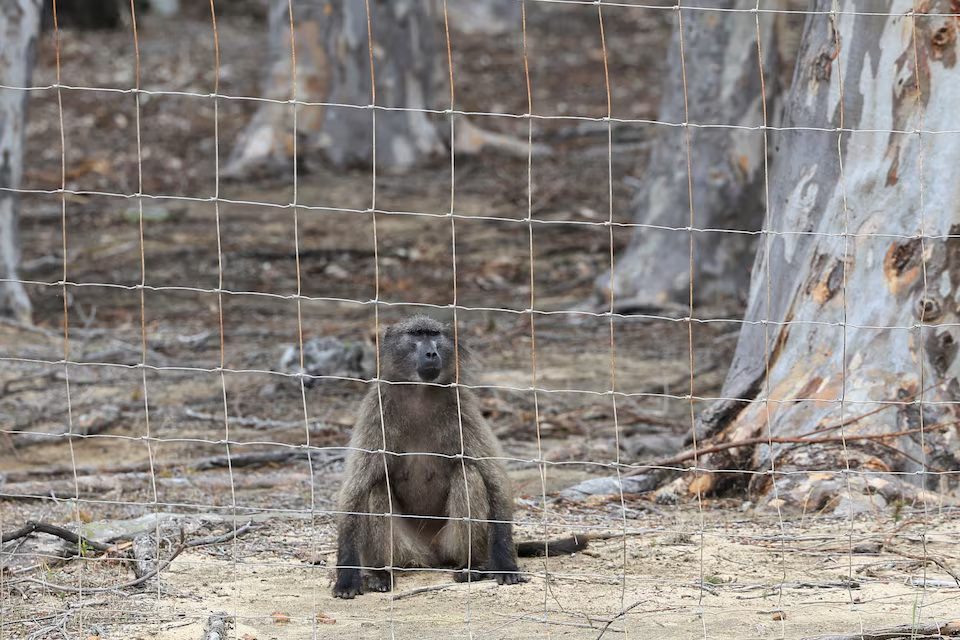
Chacma baboons have lived on the Cape Peninsula for millennia. As Cape Town expanded (human population growth of roughly 65% from 2001–2022), low-lying foraging habitat was converted into suburbs, vineyards, and infrastructure. Baboons, which lack natural predators in the area and are highly intelligent and opportunistic, increasingly entered urban spaces for calorie-rich human food.
Population figures illustrate the shift:
- Around 2000: roughly 360 baboons in about 10 troops.
- Recent censuses (2024–2025): estimates ranging from ~493 to over 600 in 12–17 managed troops (exact numbers vary by source and whether deep Cape Point troops are included).
Conflicts include:
- Raiding homes, shops, cars, and gardens (ripping roof sheeting, entering unlocked properties, night-time forays in places like Simon’s Town).
- Property damage, faeces, and devaluation of homes.
- Risks to people (intimidation, occasional physical contact) and to baboons (vehicle collisions, shootings, dog attacks, electrocution, poor diet from processed human food).
- Rising human-baboon incidents and baboon mortality linked to human causes.
Management has long involved monitors/rangers using non-lethal deterrents (paintballs, herding, etc.), baboon-proofing advice, and earlier periods of culling that largely ended under public pressure in the late 1990s/2000s. Costs have been substantial (tens of millions of rand over multi-year programmes).
The current Action Plan (core of the “saga”)
In November 2025 the Cape Peninsula Baboon Management Joint Task Team (City of Cape Town, SANParks, and CapeNature) finalised and adopted the Cape Peninsula Baboon Management Action Plan (amended in 2026). Key elements include:
- Permanent relocation of two troops (Seaforth ~16 animals and Waterfall ~42–44 animals, total around 60) from the Simon’s Town area to a purpose-built Urban Wildlife Centre / sanctuary at Kogelfontein near Scarborough. The R10-million facility (City-funded, with operating costs for several years) consists of separate semi-wild enclosures. Healthy males are to be vasectomised (or females contracepted in some descriptions); the troops will not breed and will remain captive for life. Capture was originally targeted for 2026 (Seaforth earlier, Waterfall later) but has faced delays related to permits.
- Strategic fencing (northern boundary fence from Zwaanswyk toward Constantia Nek area; potential other barriers).
- Roll-out of thousands of lockable baboon-proof bins (first batches of 2,200+ prioritised in high-conflict Far South areas from mid-September 2026 onward).
- Waste management strategy, by-law enforcement, population caps (e.g., northern sub-population max ~250, southern managed troops capped), and continued monitoring/herding for remaining free-ranging troops.
- Other troops (e.g., certain Constantia ones) may be moved or managed differently (release on the mountain side of new fencing in some cases).
Authorities frame this as the best available option after years of failed deterrence for these specific highly habituated troops: reduce conflict and risk for both people and baboons, improve welfare by removing them from dangerous urban environments, and protect the broader free-ranging population. Translocation elsewhere was deemed unviable (no suitable receiving habitat without harming local troops), and widespread culling faces strong public opposition.
The intense controversy
The plan has sharply divided residents, scientists, conservationists, and activists:
Supporting side (authorities, some residents and scientists such as behavioural ecologist Justin O’Riain):
- These troops spend excessive time in town; non-lethal methods have repeatedly failed to keep them out sustainably.
- Urban living leads to poor welfare (injuries, unnatural diets, stress, illegal killings).
- Sanctuary offers safety, food, and social structure intact while allowing population control.
- Broader measures (bins, fencing, education) address root attractants for remaining troops.
- Delaying prolongs harm; legal challenges have largely failed (Western Cape High Court dismissed interdicts against key aspects of the plan).
Opposing side (animal welfare groups, some residents, researchers such as David Gaynor, organisations like WAPFSA and local Green Group Simonstown):
- Permanent captivity (especially with sterilisation and no release path) amounts to a slow extinction of these troops—“functional extirpation”—and sets a bad precedent.
- Enclosures are tiny relative to natural home ranges (hundreds of times smaller in some calculations).
- Alternatives (strategically placed baboon-proof fencing around urban edges plus rigorous waste control, monitoring, and community cooperation) have not been fully tested or prioritised first; sequencing (capturing before full bin roll-out in the affected area) is criticised.
- Root causes are human: urban expansion into habitat, poor waste management (including on SA Navy properties in Simon’s Town, frequently cited as attractants), and inconsistent enforcement.
- Concerns about long-term funding for the sanctuary, fire evacuation, welfare in captivity, lack of independent scrutiny, and procedural issues (permit readiness, public participation differences between the high-level strategy and the specific Kogelfontein model).
Protests, media campaigns, petitions, and ongoing debate (including international coverage) have been prominent through 2026. Some communities (e.g., Rooiels) demonstrate relative coexistence success through voluntary baboon-proofing and norms, but experts note this may not scale to denser or more conflicted suburbs.
Current status (as of early October 2026)
- The Kogelfontein facility is reported complete.
- Baboon-proof bin distribution and northern fence works have begun or are underway.
- Relocation of the Seaforth and Waterfall troops remains pending the necessary Wild Animal Captivity Permit and related authorisations from CapeNature; reports indicate the application process was incomplete as of late September 2026, with earlier scheduled capture dates not proceeding.
- Legal and advocacy pressure continues; authorities state the approved Action Plan will be implemented.
- Broader peninsula management (monitoring remaining troops, population caps, waste strategies) proceeds in parallel.
This is a classic “wicked problem” of human-wildlife conflict in a biodiversity hotspot under intense urban pressure. It pits immediate resident safety and property interests against animal welfare, conservation of free-ranging populations, questions of habitat responsibility, and long-term sustainability of management interventions. Outcomes for the two troops will be closely watched as a potential model (or cautionary tale) for similar conflicts elsewhere.