

Around age 16, she was captured—likely with her husband Domingo and children—by slave raiders and transported through slave trading networks involving Ceylon (Sri Lanka), Batavia (modern Jakarta), and then to the Cape of Good Hope.
Key Details of Her Story
- Arrival: She reached Table Bay in early 1657 (around February) aboard the VOC ship Amersfoort (or part of a returning fleet), brought by freeburgher/commander Pieter Kemp as his personal servants. Kemp sold her and her family to Jan van Riebeeck, the founder and commander of the Dutch settlement established in 1652.
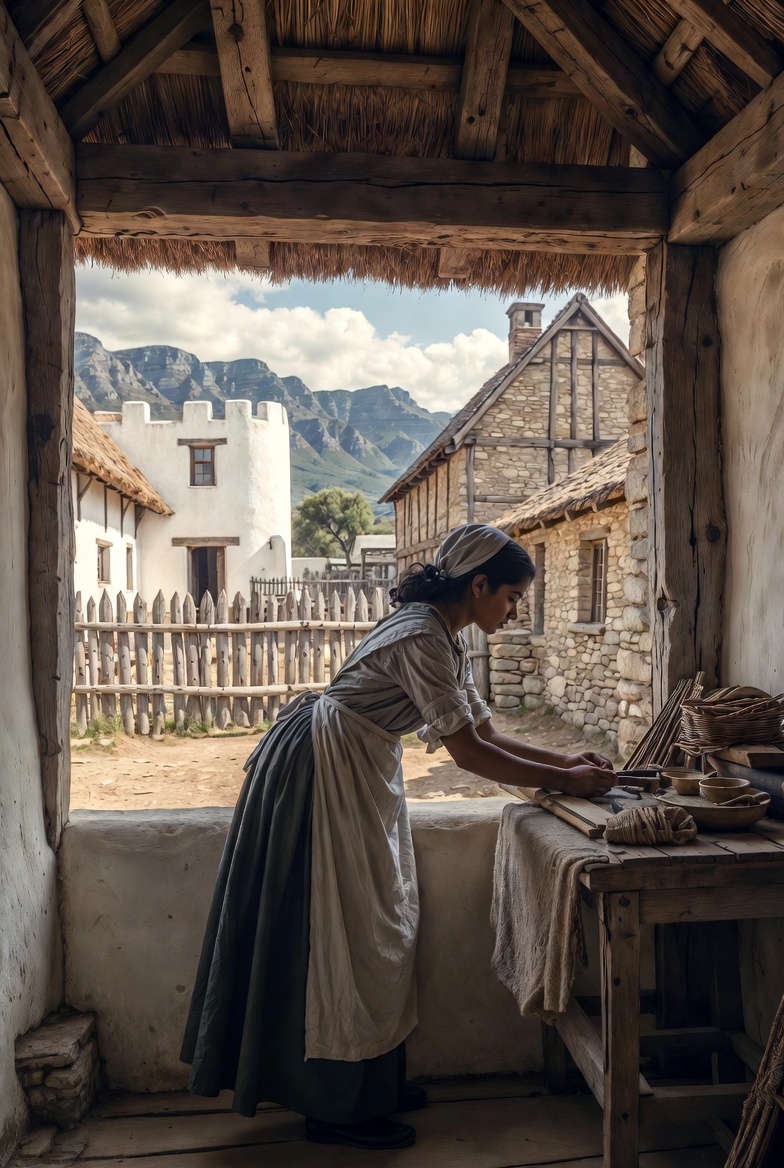
- Life at the Cape: She worked in van Riebeeck’s household at the Fort de Goede Hoop. While there, she had additional children born into slavery. The Dutch assigned her the toponym “van Bengale” (of Bengal), replacing her original name.
- Manumission (Freedom): After van Riebeeck left the Cape in 1662, she was sold to Abraham Gabbema. He freed her and her children on 13 April 1666—one of the earliest manumissions of slaves at the Cape.
- Later Life and Legacy: Angela became a successful free woman. She owned property (one of the first female former slaves to do so), accumulated wealth (including significant guilders by her death around 1720), and was a respected figure. Her daughter Anna de Koningh (or de Coningh) became a notable wealthy socialite and landowner.
This occurred in the very early days of the Cape settlement, before large-scale slave imports ramped up (the first major shipment arrived in 1658). Enslaved people from Bengal/India, Indonesia, Madagascar, and elsewhere were brought to provide labor for the VOC refreshment station. Many from Bengal adapted well after manumission and integrated into the emerging Cape society.
The story highlights the brutal realities of the Dutch East India Company (VOC) slave trade routes connecting Asia to southern Africa, as well as individual resilience—Angela transitioned from enslaved domestic worker to property owner in a frontier colonial society. Sources include VOC records, genealogical research, and histories of early Cape slavery.