





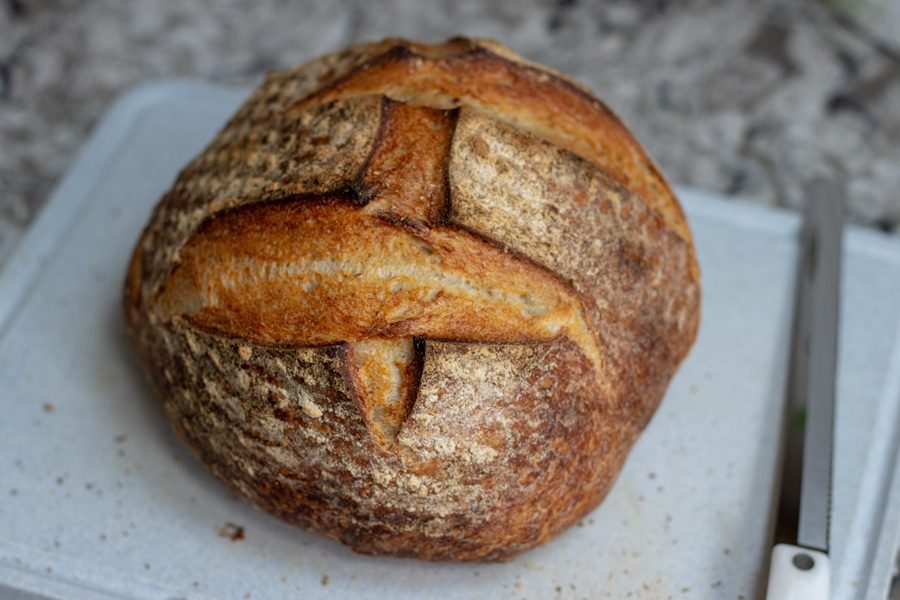
No, sourdough bread is not inherently fattening. Like any bread (or carbohydrate-rich food), it contains calories and can contribute to weight gain if you eat it in large amounts as part of an overall calorie surplus. However, it often compares favorably to many conventional breads for weight management due to how it’s made.
Calories and Basic Nutrition
A typical slice of sourdough (around 50–60g) has roughly:
- 130–188 calories
- 25–36g carbohydrates
- 1–2g fiber
- 2–4g protein
- Very low sugar (often <1g, with no added sugars in traditional recipes)
These numbers are similar to white bread or other yeast-leavened breads when made from refined flour. Some analyses show sourdough slightly higher in calories per 100g than white bread, but real-world slices are comparable, and many traditional sourdoughs have no added fats or sugars (unlike some commercial breads).
The key differences come from the long fermentation process using a natural starter (wild yeast and lactic acid bacteria), which changes how your body handles the bread.
Why Sourdough May Be Less Likely to Promote Weight Gain
- Lower glycemic index (GI): Sourdough typically has a GI around 54 (low to medium), compared to 70+ for white bread. This means slower digestion, smaller blood sugar and insulin spikes, and potentially better appetite control. High-GI foods can lead to quicker hunger returns and overeating.
- Resistant starch and prebiotics: Fermentation turns some starches into forms that act more like fiber. These feed gut bacteria, may improve digestion, and can help with satiety (feeling full longer) without fully contributing to calorie absorption in the same way.
- Better satiety signals: Some studies show sourdough leads to slower gastric emptying, reduced post-meal hunger, and more stable energy levels compared to regular bread. It doesn’t always reduce total calorie intake at the next meal, but the metabolic response is gentler.
- Easier digestion: Lower phytates and partial breakdown of starches/gluten can reduce bloating for some people, making it feel less heavy.
Whole-grain or whole-wheat sourdough amplifies these benefits with more fiber, which strongly supports fullness and weight control.
Important Caveats
- Portion control still matters: 1–2 slices per day can fit into a balanced diet for weight loss or maintenance. Eating half a loaf at once will add up in calories, regardless of fermentation.
- Not a “superfood” for fat loss: No single food causes or prevents weight gain. Overall diet quality, total calories, protein intake, activity level, and sleep are far more important. Sourdough won’t override a calorie surplus.
- Variations exist: Store-bought or heavily processed “sourdough-style” breads may have additives and lose many benefits. Authentic, long-fermented versions (especially with whole grains) are best.
- Individual factors: People with insulin resistance or diabetes may notice better blood sugar responses with sourdough, which indirectly supports weight management. Those sensitive to carbs in general should still monitor portions.
Bottom Line
Sourdough is generally a better bread choice than standard white bread for most people interested in stable energy, gut health, and avoiding big insulin swings—factors that can make weight management easier. But it’s still bread: enjoy it mindfully as part of a varied diet with plenty of vegetables, proteins, and healthy fats. If weight loss is your goal, pair it with nutrient-dense foods rather than loading it with high-calorie spreads.
If you’re tracking macros or have specific health conditions, check labels or use a nutrition app for your exact loaf.